
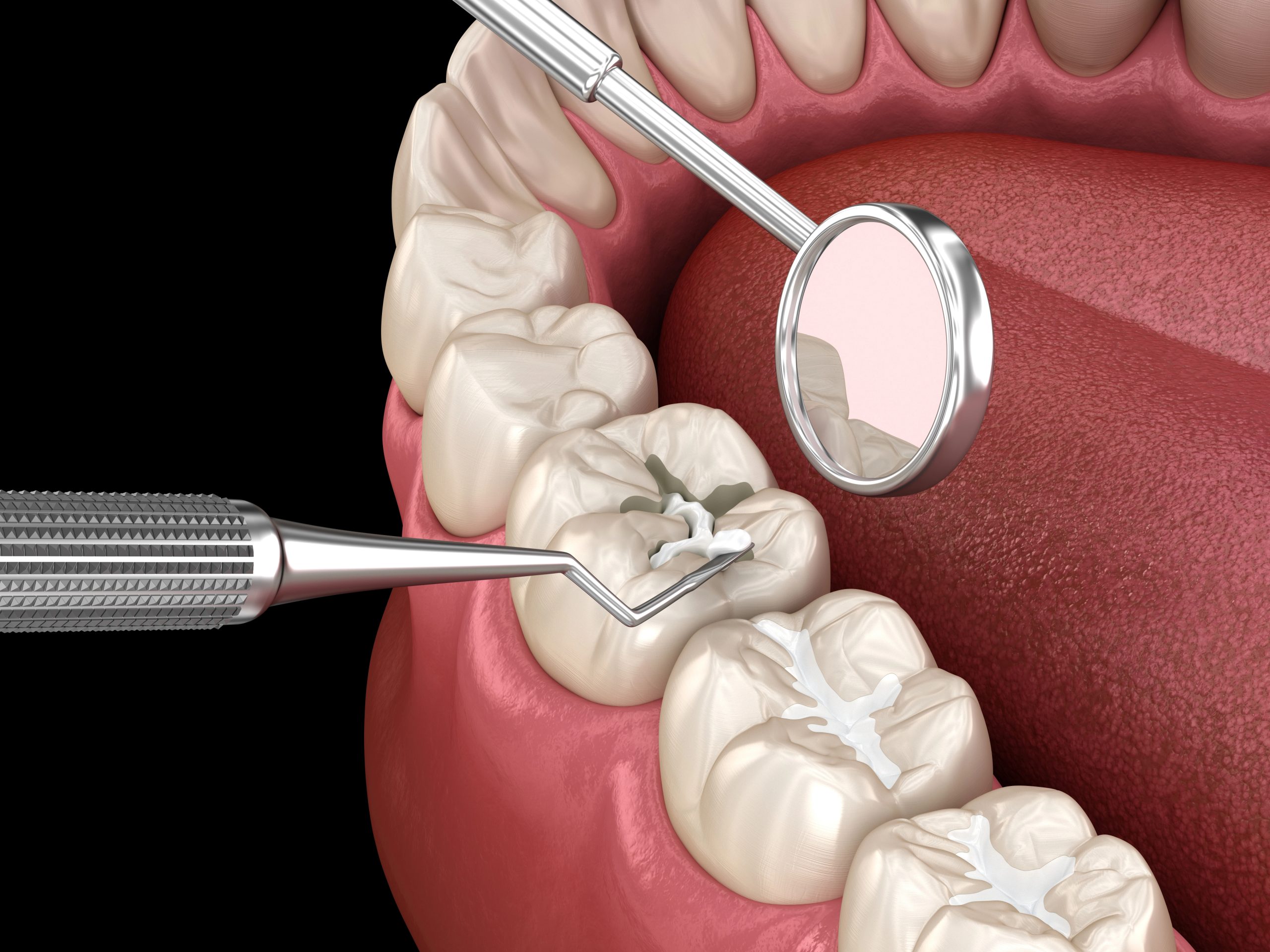
What is the difference between dental sealants and fillings in protective care? Dental sealants are a preventive measure applied to the chewing surfaces of teeth to protect against decay, while fillings are used to restore teeth that have already been damaged by cavities. Understanding the distinct roles of each can help in maintaining oral health.
Dental sealants vs fillings
Dental sealants vs fillings are often compared when discussing preventive dental care. Dental sealants are a thin, protective coating applied to the chewing surfaces of the back teeth, primarily the molars and premolars. This coating acts as a barrier, protecting the enamel from plaque and acids that can lead to cavities. Sealants are typically clear or white and are not visible when you talk or smile. They are most effective when applied to teeth that have deep grooves or pits, which are more susceptible to decay.
While dental sealants are commonly associated with children, they can also be beneficial for adults. For more information on how adults can benefit from this preventive measure, visit our page on Dental Sealants for Adults: Not Just for Kids—Preserve Your Teeth at Any Age. By understanding the role of dental sealants vs fillings, individuals can make informed decisions about their oral health and choose the best protective care for their needs.
Definition of Dental Fillings
Dental fillings are a common dental procedure used to restore the function and integrity of a tooth that has been compromised by decay or damage. When a cavity forms, a dentist removes the decayed portion of the tooth and fills the area with a material such as amalgam, composite resin, or gold. This process not only helps in restoring the tooth’s shape but also prevents further decay by sealing off spaces where bacteria can enter. In the discussion of dental sealants vs fillings, it’s important to note that fillings are typically used after decay has occurred, whereas sealants are preventive.
In contrast to dental sealants, which are applied to the surface of teeth to prevent cavities, fillings are a reactive treatment used once decay is present. The choice between dental sealants vs fillings often depends on the current state of the tooth and the level of protection needed. For more information on preventive care options, visit our Commack Kids Dental Sealants page.
Purpose of Dental Sealants
Dental sealants serve as a protective barrier applied to the chewing surfaces of the back teeth, primarily the molars and premolars, to prevent cavities. Unlike fillings, which are used to restore teeth that have already been damaged by decay, dental sealants are a preventive measure designed to shield teeth from the accumulation of food particles and bacteria. In the discussion of dental sealants vs fillings, it’s important to understand that sealants are typically applied to healthy teeth to maintain their integrity, whereas fillings are used to repair and restore teeth that have already experienced decay.
Purpose of Dental Fillings
Dental fillings are primarily used to restore the function and integrity of a tooth that has been compromised by decay or damage. When a cavity forms, it creates a hole in the tooth that can lead to further deterioration if not addressed. Fillings help to fill this space, preventing bacteria from entering and causing more harm. This restorative procedure not only helps maintain the tooth’s structure but also alleviates any discomfort associated with cavities. In the discussion of dental sealants vs fillings, it’s important to understand how each serves a unique role in oral health. For more information, visit Gentle Dental at Commack Dentist.
Application Process Differences
When considering dental sealants vs fillings, it’s important to understand the differences in their application processes. Dental sealants are typically applied as a liquid resin that is painted onto the chewing surfaces of the teeth, where it quickly hardens to form a protective barrier. This process is generally quick and non-invasive, often requiring no drilling or anesthesia. In contrast, fillings involve removing decayed tooth material before placing a filling material into the cavity. This procedure can be more involved, often necessitating the use of local anesthesia to ensure comfort during the removal of decay and placement of the filling. Understanding these application process differences is crucial when comparing dental sealants vs fillings for protective dental care.
Material Composition Comparison
In the discussion of dental sealants vs fillings, understanding the material composition of each can provide insight into their distinct roles in oral health care. Dental sealants are typically made from a plastic resin that is applied as a liquid and hardens to form a protective barrier on the surface of teeth, primarily used to prevent cavities. On the other hand, fillings are composed of materials such as amalgam, composite resins, or ceramics, which are used to restore the function and integrity of a tooth that has been compromised by decay. The choice between dental sealants and fillings often depends on the condition of the tooth and the specific needs of the patient.
Longevity and Durability
When considering dental sealants vs fillings, understanding their longevity and durability is crucial. Dental sealants are typically applied to the chewing surfaces of molars to prevent decay and can last several years with proper care, though they may need reapplication over time. Fillings, on the other hand, are used to restore teeth that have already experienced decay and are designed to withstand the pressures of daily chewing, often lasting many years depending on the material used. Both options offer unique benefits in terms of protecting teeth, but their durability can vary based on individual oral health habits and maintenance.
Cost Considerations
When evaluating dental sealants vs fillings, understanding the cost implications is crucial. Dental sealants are generally more affordable as they are preventive measures applied to protect teeth from decay. In contrast, fillings are typically more expensive since they involve treating existing cavities and restoring tooth structure. The cost difference can be attributed to the complexity and materials used in each procedure. It’s important to consider these financial aspects when deciding between dental sealants and fillings for maintaining oral health.
Suitability for Different Ages
When considering dental sealants vs fillings, it’s important to understand their suitability for different ages. Dental sealants are often applied to children and teenagers as a preventive measure to protect their developing teeth from cavities. This is because sealants are most effective on the chewing surfaces of the back teeth, where decay is most likely to occur. On the other hand, fillings are typically used for individuals of all ages who already have cavities that need to be treated. While both dental sealants and fillings serve to protect teeth, their application and purpose vary depending on the age and dental health needs of the individual.